I led user research for My Financial Counsel to build intelligent personas guiding the product strategy.

UX Research
Persona Development
Affinity Mapping
Client
My Financial Counsel
Project Timeline
3 Weeks
My Role
UX Researcher
The Team

Product Designer (Me)

CEO

Business Dev Director

Overview

My Financial Counsel is an online marketplace designed to match people with fee-only financial advisors. Based on experience working with these types of financial advisors, the team knew this type of customer existed, but was having trouble identifying who these people were and what type of messaging appealed to their needs and goals.

Results

  • Ran 9 structured interviews with people in the target audience, to understand their real goals and worries about money.
  • Synthesized the interview data with affinity mapping and a 2x2 matrix framing how people feel about their finances.
  • Built three personas, each with unique goals, frustrations, pathways to learning, and communication touchpoints.
  • The personas were used to inform the team’s ongoing marketing and product strategy.

Our Problem Statement

How might we identify the people who would most benefit from a fee-only financial advisor and best speak to their goals?

Starting With the Question

The company had been running for about a year without much traction. We knew anecdotally that the type of user we were looking for existed, but had trouble identifying the specifics around that type of person. In order to begin researching this, I followed our problem statement: How might we identify the people who would most benefit from a fee-only financial advisor and best speak to their goals?

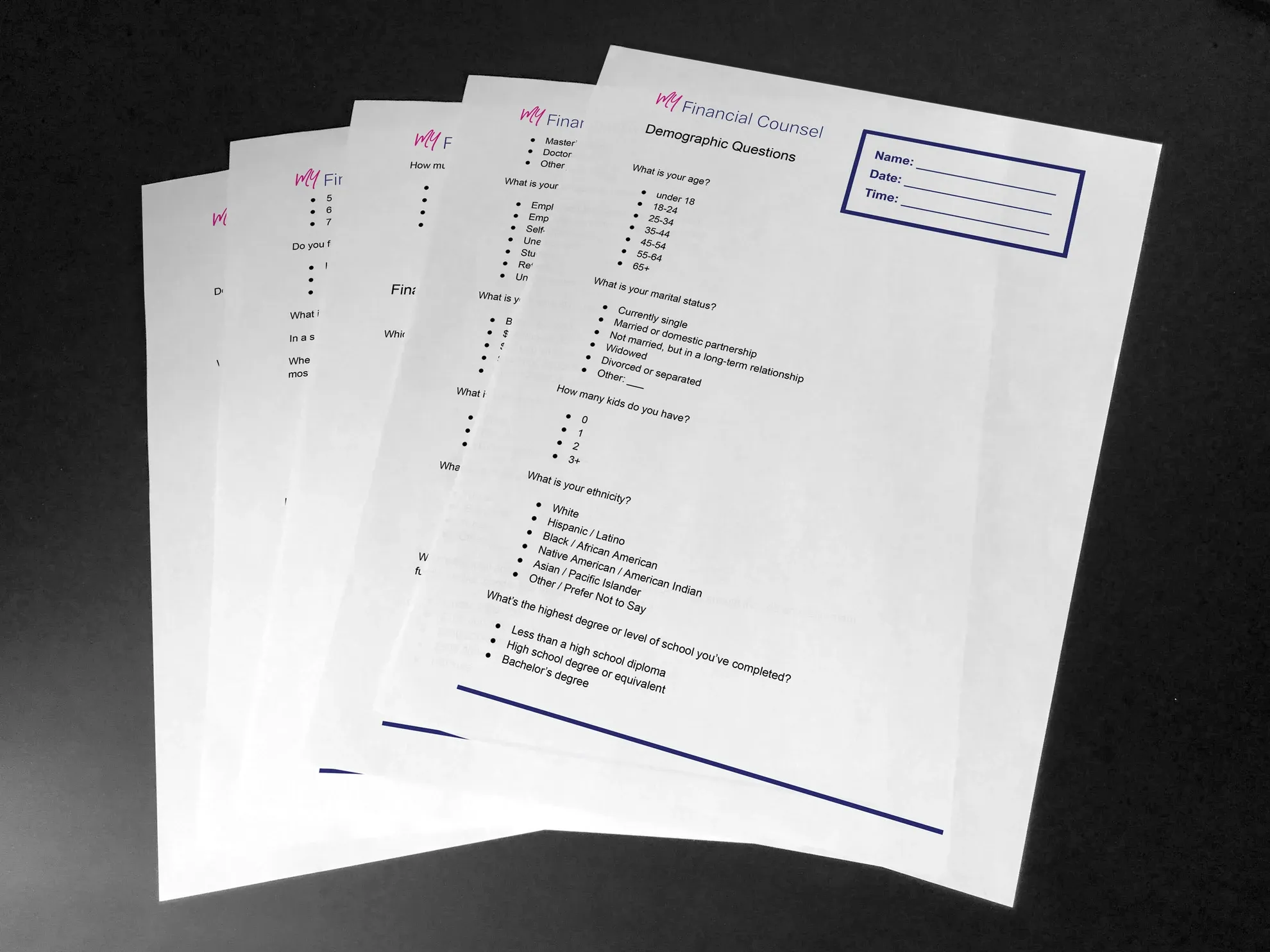
Printed demographic survey pages fanned out on a dark table.
Candidates were first pre-screened with basic demographic data, to help make sure we were sourcing from a wide range of backgrounds.
  • Do you feel like you are ahead or behind in getting your personal finances in shape?

  • How would you rate your own level of financial expertise?

  • How would you describe your approach to budgeting?

  • What’s a big life goal you’re hoping to accomplish in the next 5 years?

  • How do you manage finances with your spouse or partner?

  • What are your thoughts on taking risks in life?

  • What is one thing about investing you wish you knew more about?

  • What specific event made you decide to get a financial advisor?

These are some of the questions I asked the interviewees.

Nine Conversations

I recruited nine people within the scope of our possible target audience, with an emphasis on working to have a wide range of diversity among who I talked to. Each person filled out a short survey first, which gave me basic demographic info in order to help inform the interview. Then, I ran scripted interviews in person or by video, and recorded the experience for further analysis.
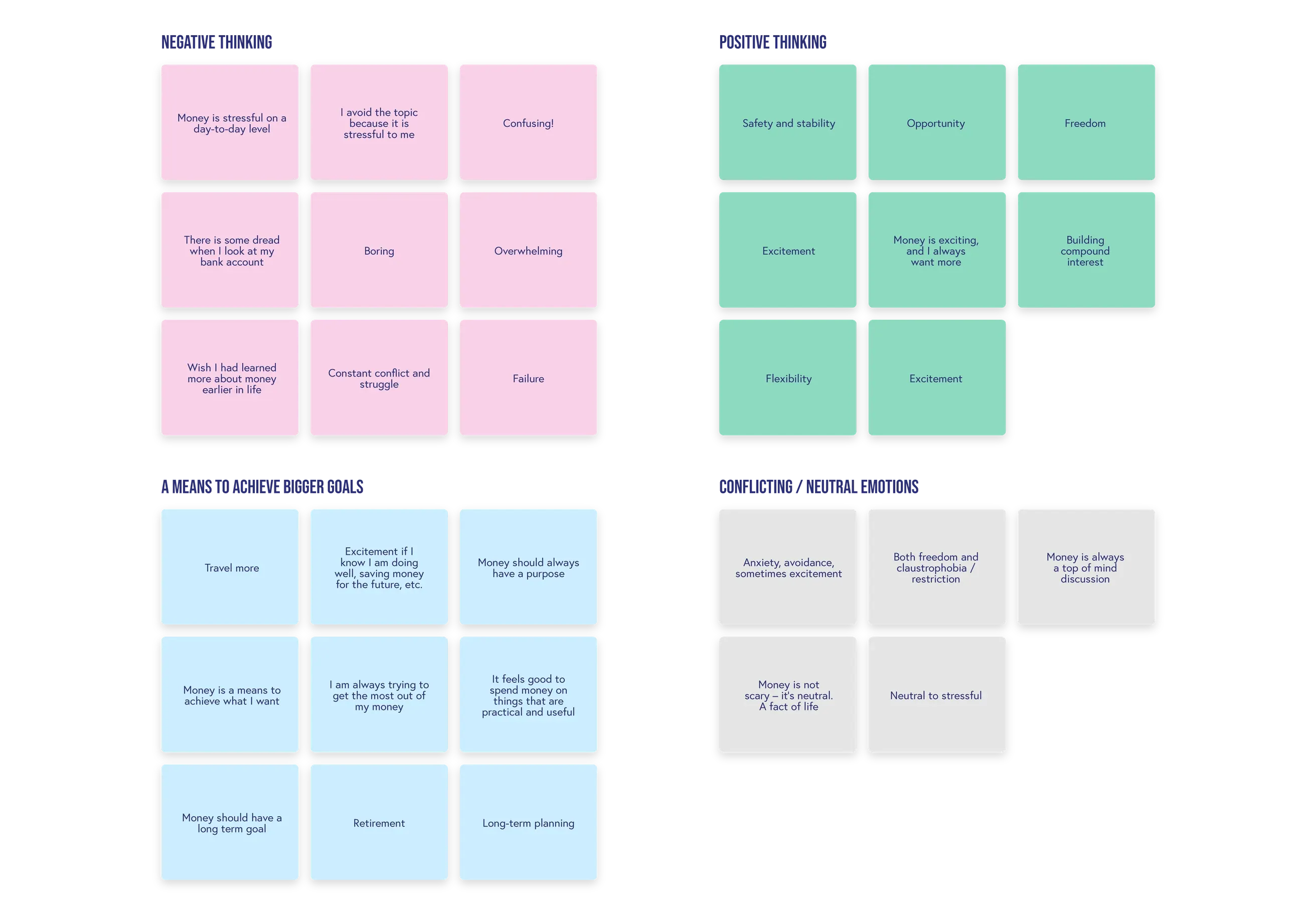
An affinity map of sticky notes grouped into negative thinking, positive thinking, a means to achieve bigger goals, and conflicting or neutral emotions about money.
Affinity mapping became a useful tool for parsing interview data, and all the emotions people have around money.
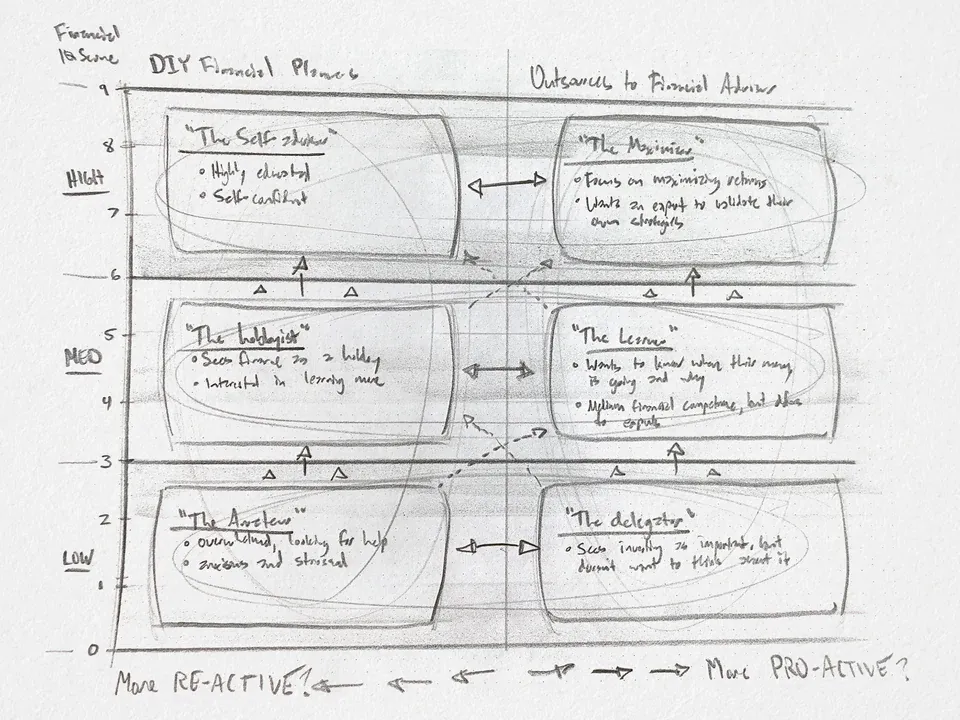
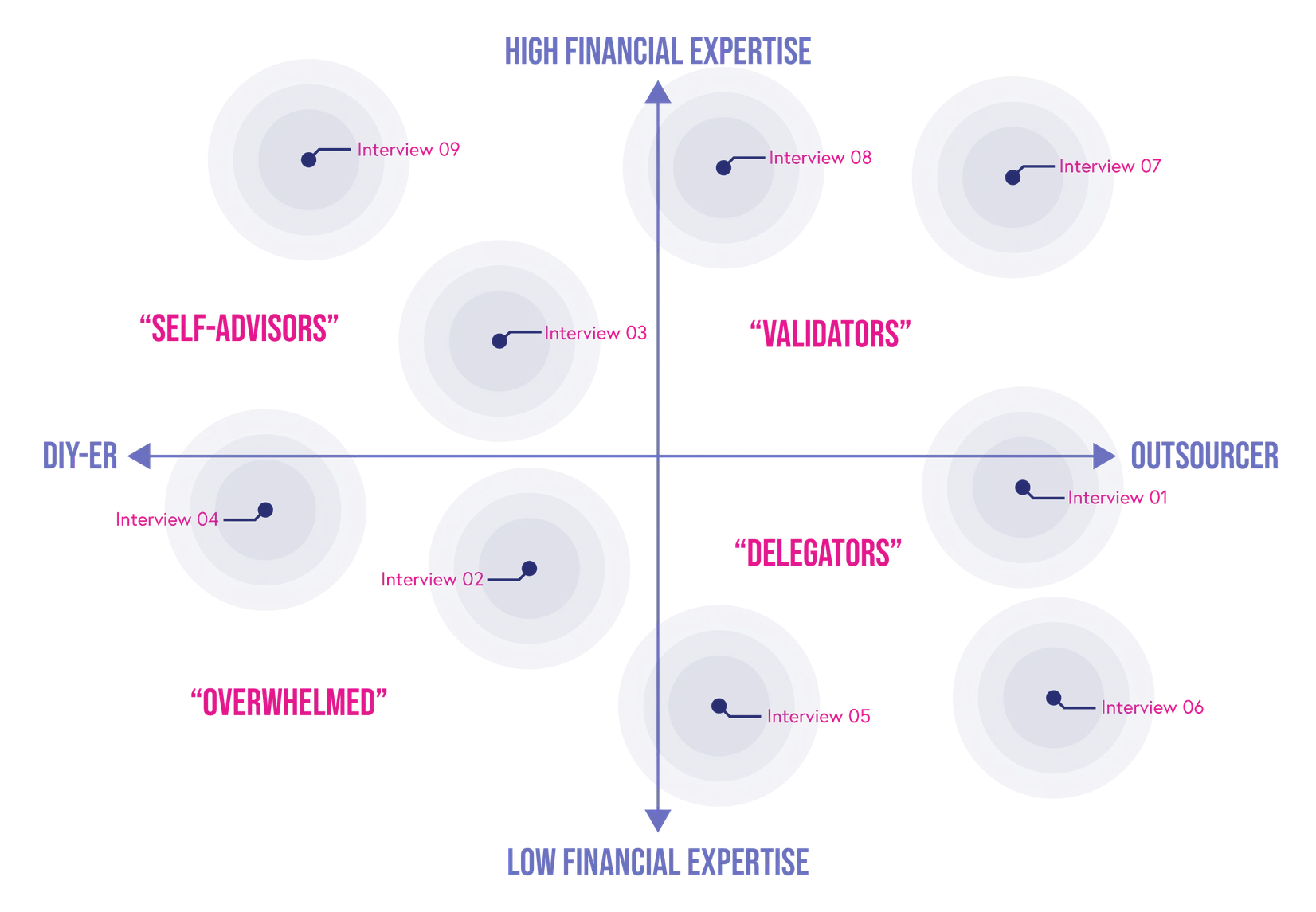
A 2x2 grid placing the nine interviewees by financial expertise, from low to high, and by DIY versus outsourcing, in four groups: self-advisors, validators, delegators, and overwhelmed.
The people I interviewed spanned a full range of perspectives around money.

Making Sense of the Interview Data

I first began parsing the data using affinity mapping, paying especially close attention to memorable quotes and other key insights gathered from my notes and the interview transcripts. Something I learned from this experience is that there is a wide range of how people think about money, but even so, it wasn’t long before common themes began to show up.

Some people followed a strict zero-based budgeting process, and other people preferred to just have a general awareness of where their money was going. Some people felt really anxious about their financial situation, and others felt excited or motivated. Nearly everyone wished they saved more, and many struggled with student loans and other forms of debt.

A pencil sketch of the first 2x2 grid, financial expertise against DIY versus outsourcing.
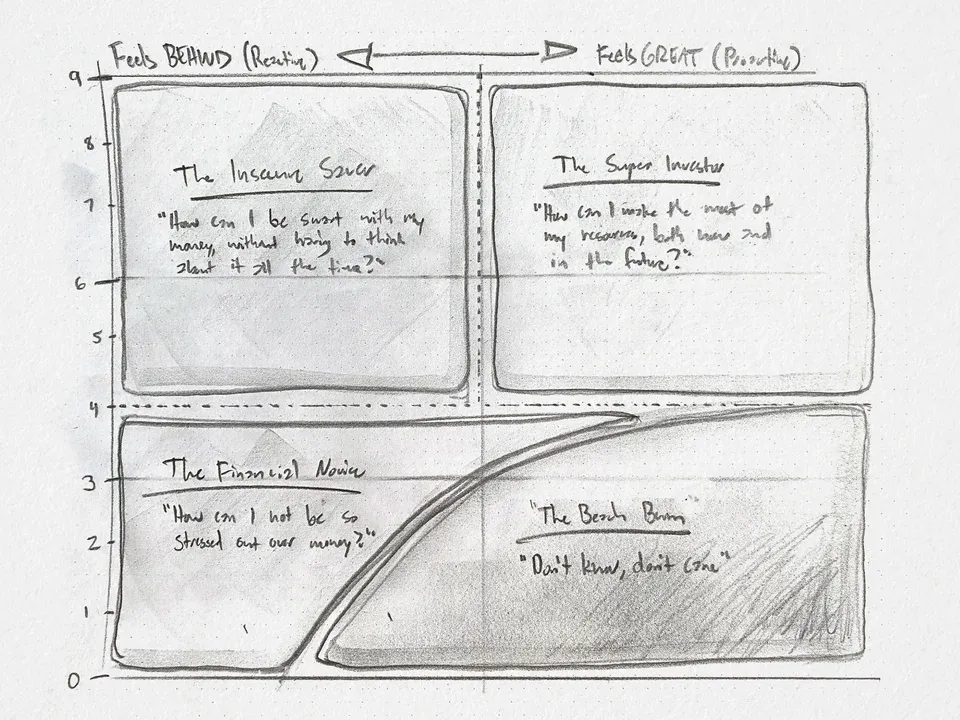
A pencil sketch of the reframed 2x2 grid, financial expertise against feeling behind versus feeling great.
A helpful way to understand how people manage their finances is proactive vs. reactive. This is critical in shaping how they feel about money.

Feeling Behind vs. Feeling Great

Originally the 2x2 grid I created mapped our interview candidates on a continuum between outsourcing vs. DIY finances, but after discussing this more with the team, it became clear that emotion was a much bigger component than I originally thought. After several iterations, I reframed the grid to account for financial literacy acumen on the y-axis, and the x-axis represented feeling behind vs. feeling great.

In terms of our product and learning how to speak well to our audience, we determined how a user felt about their finances mattered so much more than how they were doing by other, more objective measures. A key takeaway in this process is emotions are absolutely critical in shaping how people think about money.

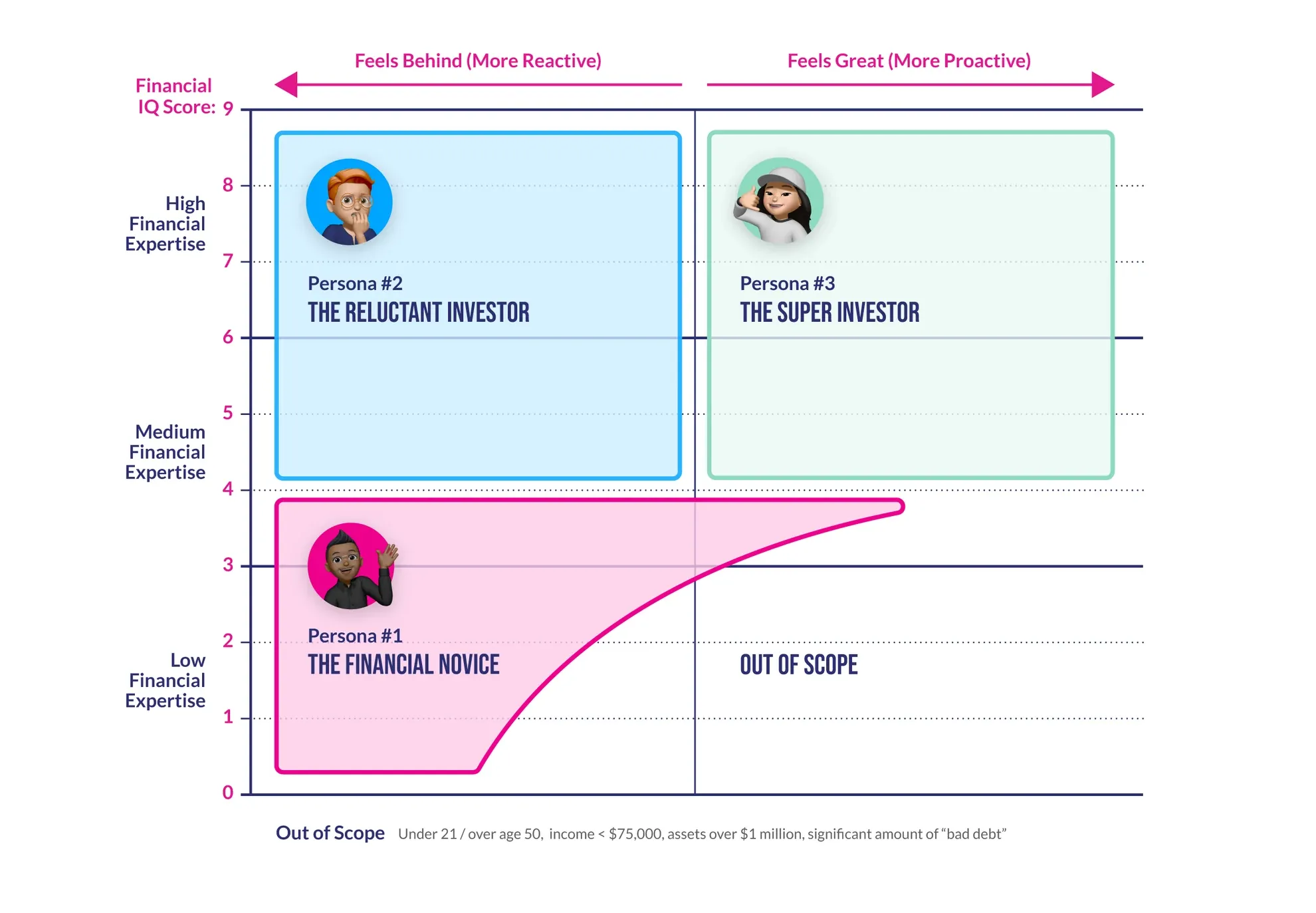
The final 2x2 grid: the Reluctant Investor and the Super Investor at high financial expertise, the Financial Novice at low expertise, and an out-of-scope group, across feeling behind to feeling great.
The final 2x2 grid shows how the personas relate to each other.

Our Final Personas

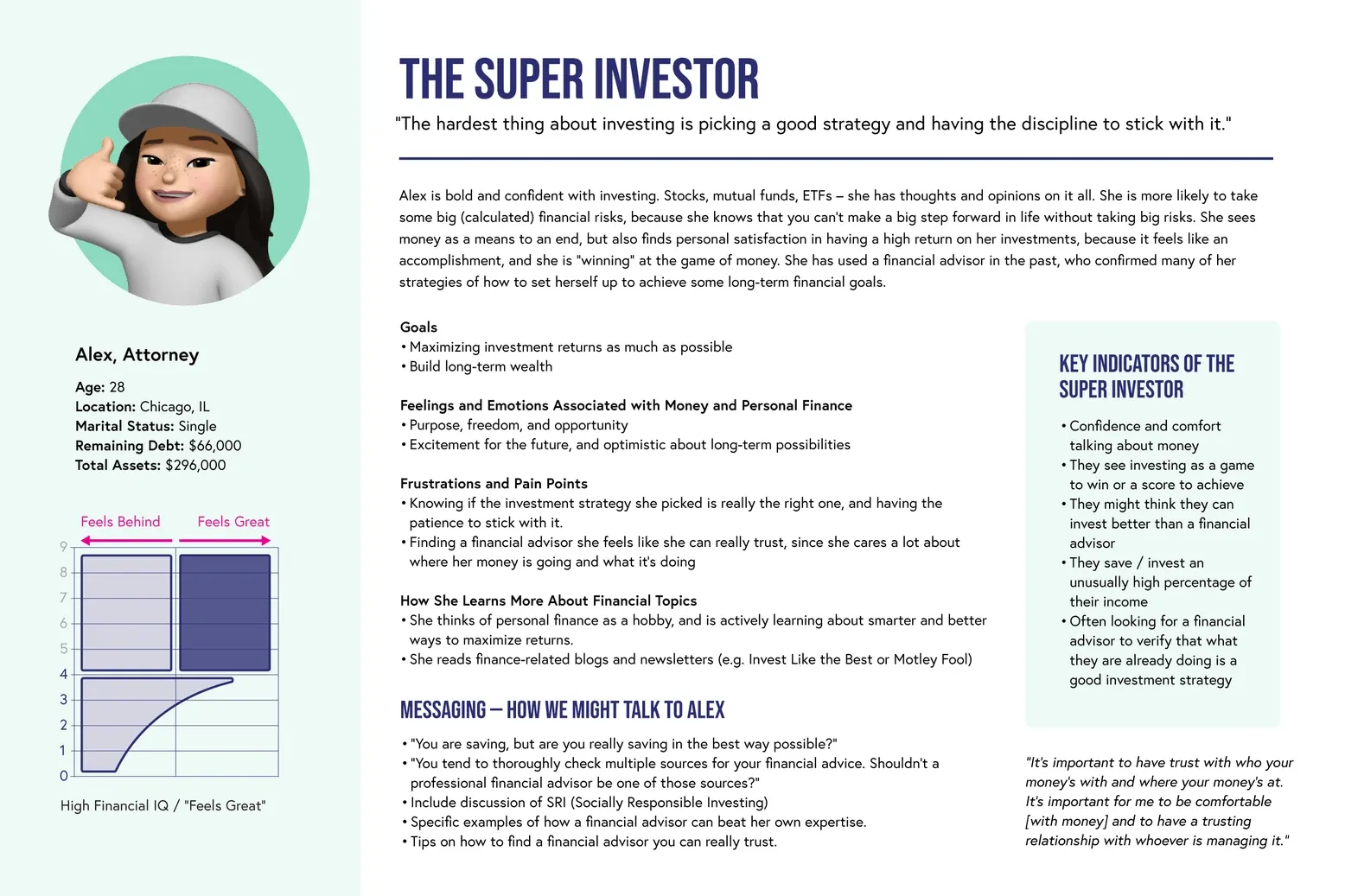
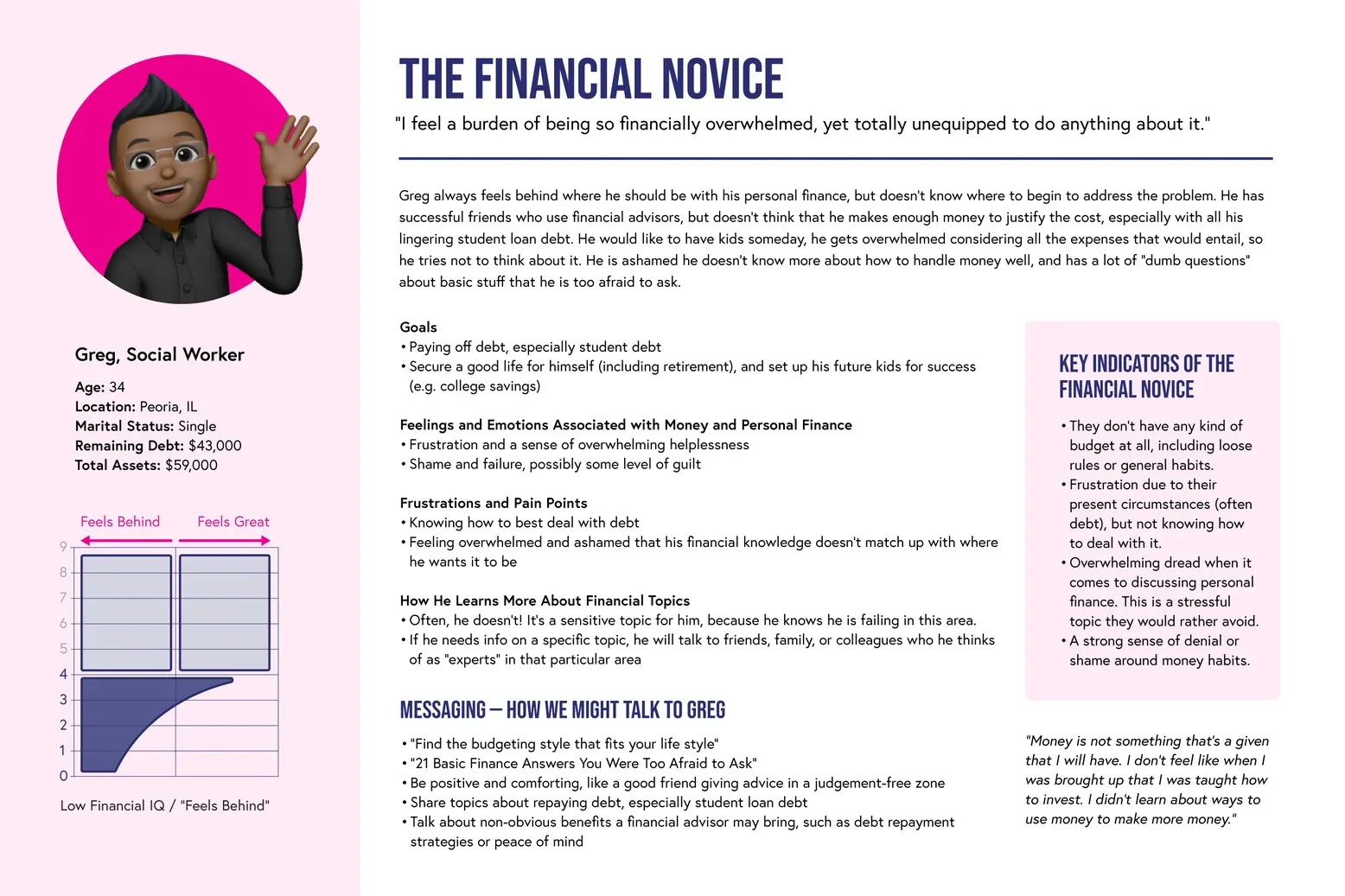
The final deliverable of this project was three fully formed personas who represented our target audience. These personas were used to inform our ongoing product and marketing strategy.

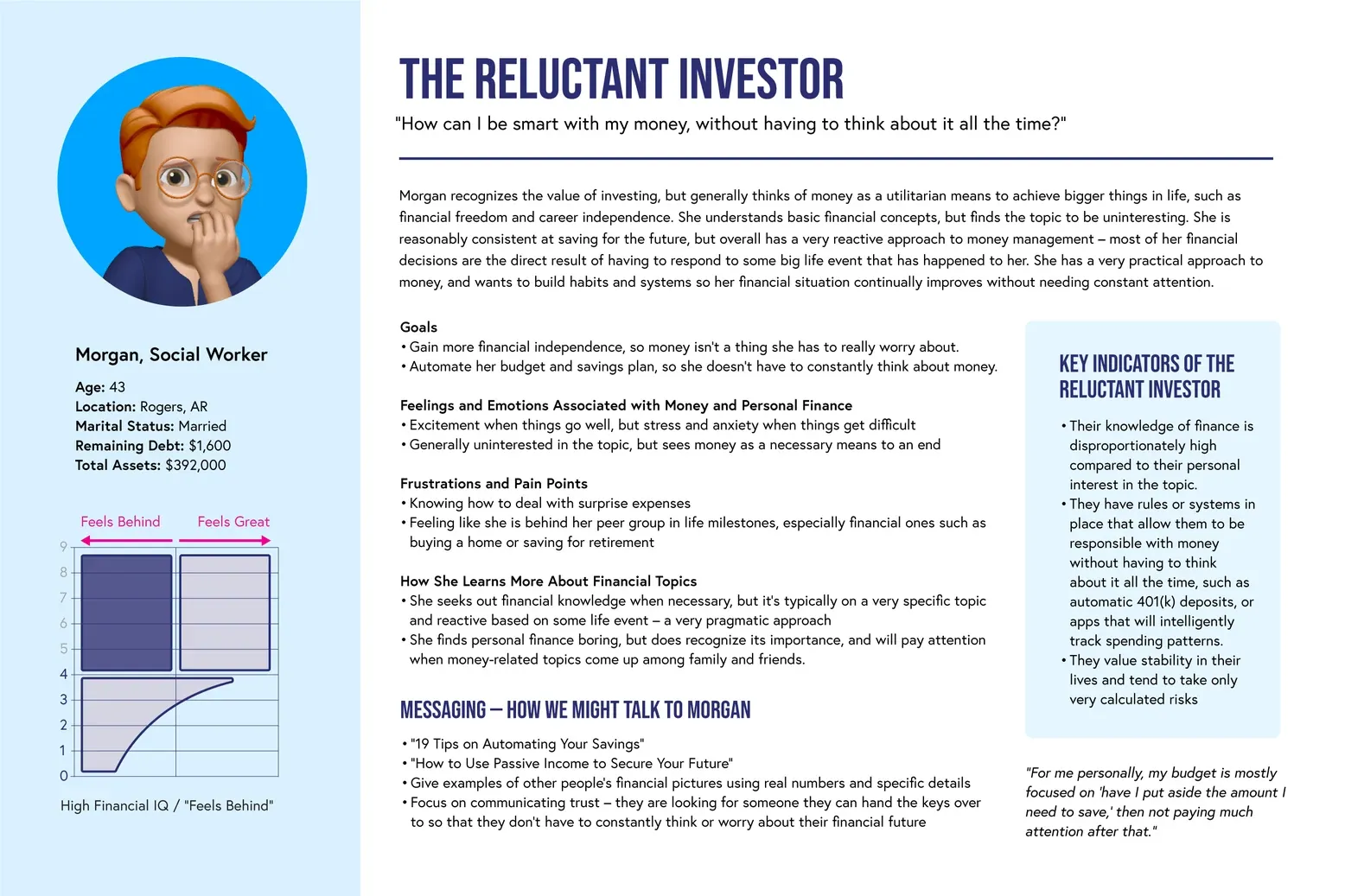
Persona sheet for the Reluctant Investor.
Persona sheet for the Super Investor.
Persona sheet for the Financial Novice.
The final personas helped shape future and ongoing marketing and product decisions.
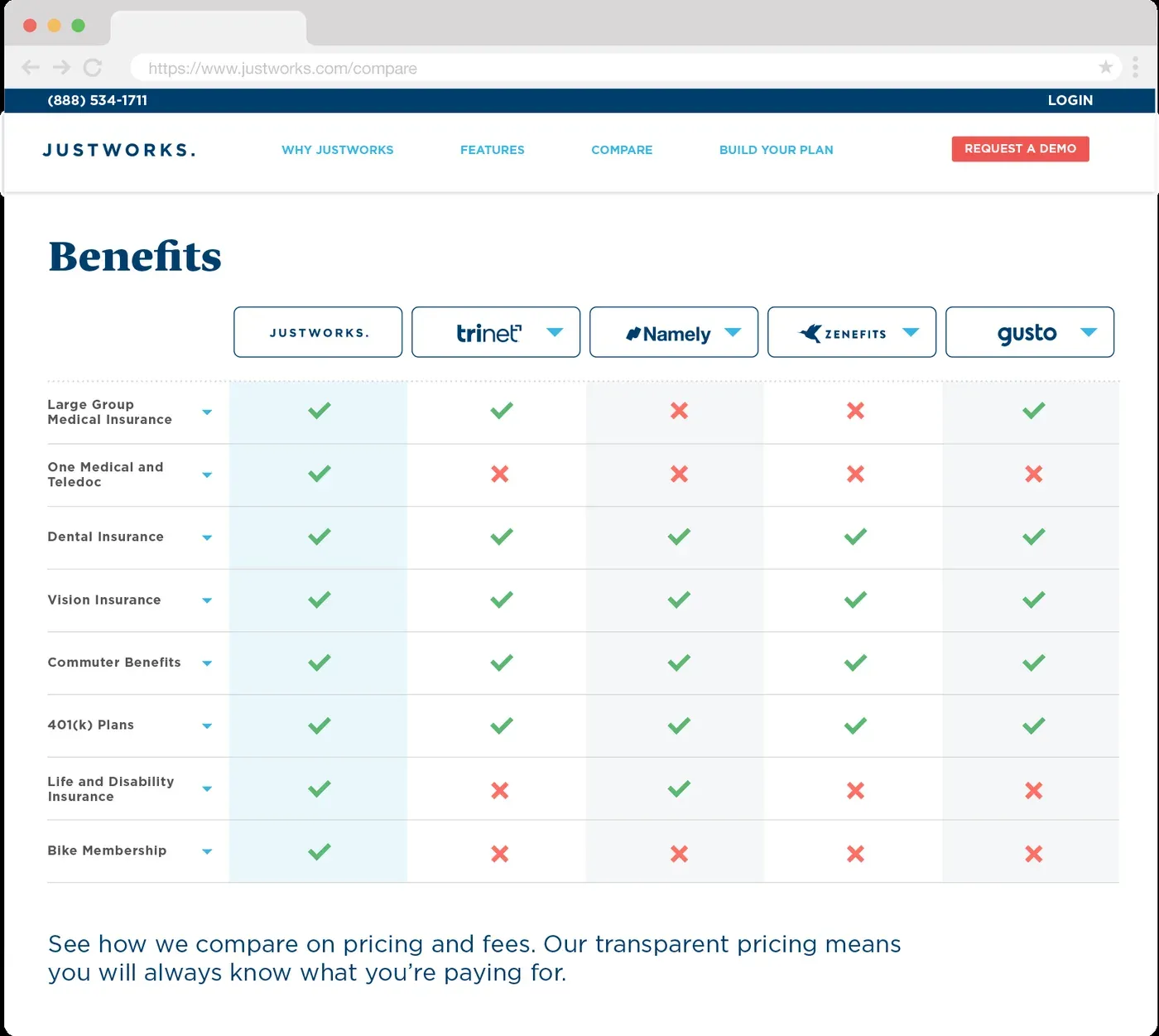
A browser window showing the Justworks benefits comparison table
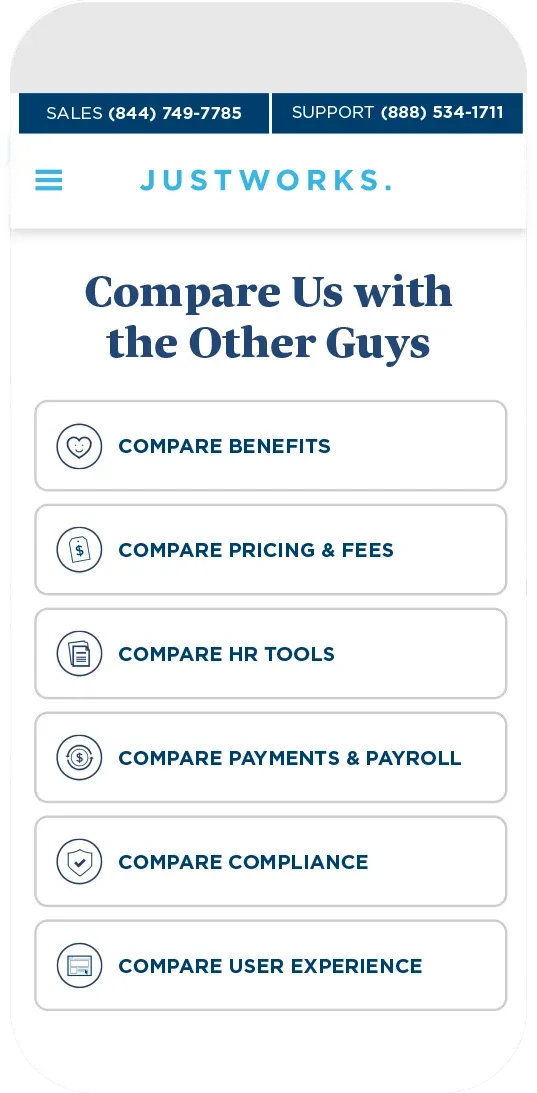
A phone showing the Justworks comparison page: "Compare Us with the Other Guys" with links to compare benefits, pricing and fees, HR tools, payments and payroll, compliance, and user experience
A phone showing a Justworks versus Namely comparison with a Namely dropdown and a View Pricing button

Next Project

Justworks Sprint Week

Check It Out